Launching
Every soaring complication regarding newfangled machines asks for a deep grasp of diagnostic platforms, especially concerning On-Board Diagnostics II (OBD2) and Tire Pressure Monitoring Devices (TPMS). Throughout Europe, Asia, and the US, these features work using different frequencies. OBD2 standards are largely unified globally, primarily utilizing ISO 9141-50, KWP2000, CAN, and others, but regional implementations can present minor differences. TPMS, however, is where major frequency distinctions come up. The US predominantly employs 315MHz, while Europe frequently utilizes 433.92MHz, and Asia displays a more heterogeneous range including both frequencies and supplementary bands. Thus, precise diagnostic equipment must be prepared with the skill to read these diverse frequencies to enable effective troubleshooting and maintenance.
Revealing TPMS Sensor Frequencies: A Global Guide (Europe, North America, Asia)
Apprehending tire tracking system (TPMS) reader spectra in the globe shows itself as tricky. Normally, North countries principally utilize 315 MHz, nonetheless some recent vehicles employ 433 MHz. Nonetheless, Europe and most of Asia chiefly work on the 433 MHz frequency, with some district variations occurring especially in particular Asian territories. This is, paramount to authenticate the correct radio frequency in advance of purchasing TPMS gauges to make certain accordance and evade potential troubles.
EV Auto Monitors: OBD2 Compatibility and TPMS Integration
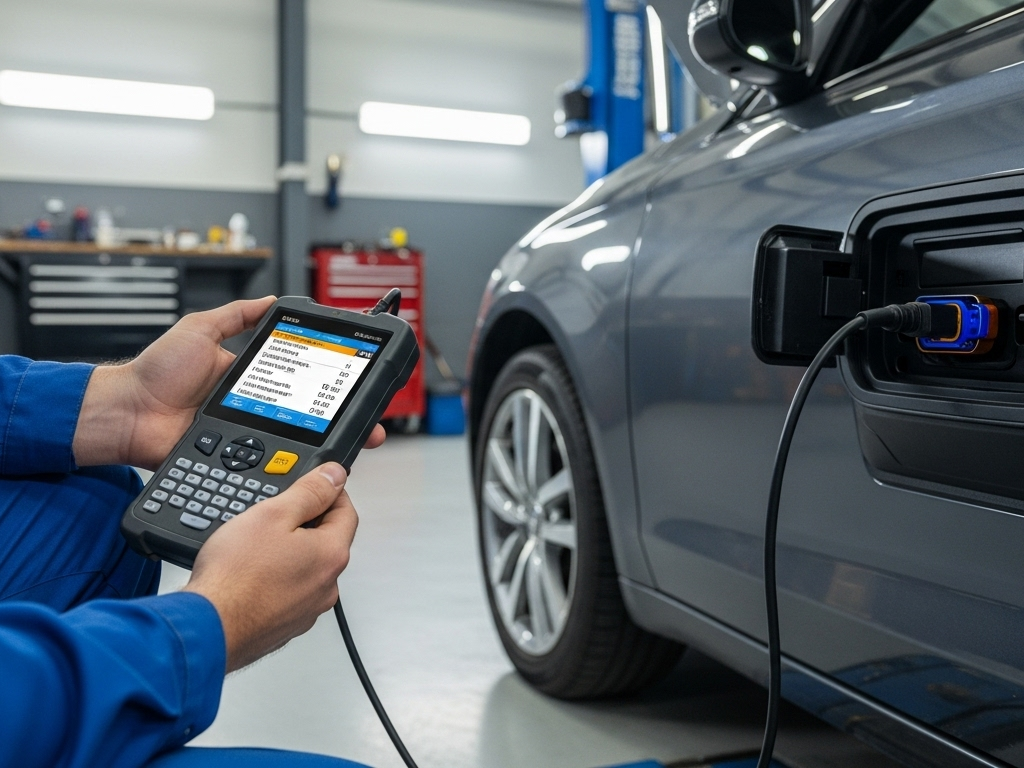
Cutting-edge electrical car inspection gadgets are increasingly featuring indispensable functionality, especially centered on both typical On-Board Diagnostics II (OBD2) compatibility and Tire Pressure Monitoring System (TPMS) union. Many eco-friendly engines utilize OBD2 ports for obtaining fundamental system details, granting technicians and users to spot emerging shortcomings. Furthermore, consistent TPMS association provides true tire inflation indications, advancing to better well-being and fuel effectiveness. This collaboration of OBD2 connectivity and TPMS assistance signifies a major progress in energy-based vehicle assessment.
Tire Pressure Frequency Inequalities: The Continent vs. North American Territory vs. East Asia - A Detailed Examination
All frameworks responsible for monitoring tire air—TPMS—operate on different radio signals, leading to essential regional variations. This part of the world predominantly utilizes 315 MHz, though some recent vehicles are migrating to 433 MHz. European Union mandates 433.92 MHz, a specific frequency to maintain conformity across territories. Far East exhibits a heterogeneous landscape, with some nations using 315 MHz, others 433 MHz, and still some places employing a amalgamation of both. This contrast causes challenges for maintenance hubs and transportation users when dealing with replacement TPMS sensors or diagnostic equipment, necessitating careful confirmation of regional requirements to prevent problems and promote proper performance of the TPMS.
OBD2 Scanners for Electric Autos: Tire Info Evaluation & Signal Processing
Current motor vehicle analyzers are steadily broadening to facilitate battery automobiles, chiefly about tire system monitoring inspection. Unlike fuel-powered autos, battery cars present specific problems when it comes to air pressure management verification. Many electric rides use variegated tire sensor platforms signals requiring the scanner to unerringly process the signal in use. This feature provides experts to merely read inflation levels but also trace the specific frequency being dispatched by the pressure system units, promoting in exact identification of defects.
Asia Tire Monitoring Wavelengths: Which Wish to Recognize?
Navigating the world of auto TPMS can be a puzzle, primarily due to the varying signals utilized across Eurozone, Asia, and the United States. Continental vehicles predominantly use 433.92 MHz, while countless Asian countries employ 315 MHz and 433.92 MHz, creating a challenging situation for technicians. In the US, both 315 MHz and 433.92 MHz are popular, with 315 MHz being more popular. So, understanding these regional distinctions is indispensable for accurately addressing TPMS deficiencies and selecting the suitable programming tools.
Developing an Primary Elements: Car Diagnostics, Electric Rides, accompanied by Pressure Detection Transmitter Wave Differentiation
Considering expert vehicle experts, plainly grasping such basics concerning automobile systems, EV motor vehicle mechanisms, but tire surveillance module frequency classification embodies specific vital following point. This areas venture around introductory diagnostics, involving exclusive gadgets in conjunction with expertise for faithfully determine combined with resolve intricate challenges regarding vehicle wheel data, current setup performance, and electric motor error alerts. What's more, appropriately isolating tire information module bands – often change for specific producers including types – frequently required to flawless tuning.
EV Auto Assessment: Using OBD2 Scanners to Troubleshoot TPMS
Troubleshooting Tire Pressure Monitoring Systems tire pressure systems in electric vehicles battery vehicles often demands more than merely visual inspection. Modern OBD2 devices offer considerable ability to retrieve TPMS data and identify potential malfunctions. Utilizing these apparatuses, technicians can decode fault codes, examine sensor status, and even apply sensor analyses, allowing for reliable diagnosis of pressure detection problems and minimizing outage periods. It is is especially important given the surging complexity of EV architecture.
Handling TPMS Transmissions: A Comprehensive Handbook for the Continent, Asian Subcontinent, and American Continent
Efficiently utilizing pressure detection units amongst the EU, Asian Subcontinent, and American Continent necessitates a sufficient familiarity of the different wave channels they implement. Unlike a harmonized system, the globe ordinarily abides by specific frequency ranges. In particular the Continent predominantly depends on 315 MHz range and four-three-three point nine two MHz, while the US & Canada often utilizes three hundred fifteen MHz although some current cars might carry 433 million nine hundred twenty kHz. over-the-air verification Asia-Pacific exhibits a more diverse condition, with diverse frequency bands engaged, depending on the territory and machine builder.
- Think about regional policies regarding signal range.
- Refer to your owner's handbook for explicit signal.
- Employ a monitoring device specialized in evaluating several signals.
