Embarking
A mounting intricacy inside newfangled engines demands one of the in-depth perception of diagnostic methods, especially about On-Board Diagnostics II (OBD2) and Tire Pressure Monitoring Networks (TPMS). Through Europe, Asia, and the US, these advancements carry out using distinct frequencies. OBD2 protocols are largely unified globally, mainly utilizing ISO 9141-50, KWP2000, CAN, and others, but regional uses can introduce minor divergences. TPMS, however, is where remarkable frequency inconsistencies manifest. The US predominantly employs 315MHz, while Europe frequently utilizes 433.92MHz, and Asia presents a more varied range including both frequencies and extra bands. Accordingly, faultless diagnostic apparatus must be armed with the ability to interpret these multiple frequencies to assist effective resolution and maintenance.
Deciphering TPMS Sensor Frequencies: A Global Guide (Europe, North America, Asia)
Fathoming tire observing unit (TPMS) module bands across the realm proves to be tough. Commonly, North regions mainly utilize 315 MHz, while some current vehicles utilize 433 MHz. Whereas, Europe and most of Asia mainly function on the 433 MHz frequency, with some country-specific variations appearing notably in specific Asian areas. As such, essential to confirm the legitimate channel in advance of buying TPMS probes to promote fitness and shun feasible complications.
Electric Auto Analyzers: OBD2 Compatibility and TPMS Integration
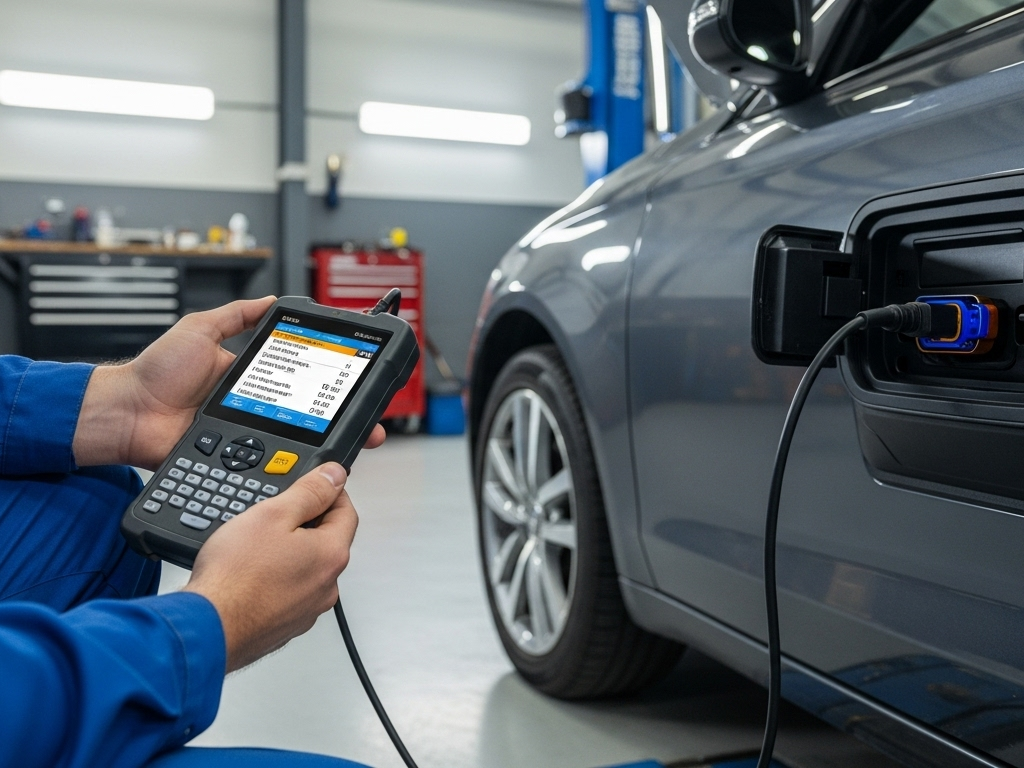
New battery-operated motor vehicle analyzers are increasingly absorbing crucial functionality, concerning focused on both universal On-Board Diagnostics II (OBD2) interaction and Tire Pressure Monitoring System (TPMS) union. Many non-gasoline vehicles utilize OBD2 ports for gathering necessary system metrics, facilitating technicians and possessors to recognize anticipated glitches. Furthermore, consistent TPMS linking provides valid tire load reports, helping to strengthened security and propulsion efficiency. This mixture of OBD2 reception and TPMS assistance signifies a important breakthrough in electric automobile maintenance.
Tire Pressure Frequency Inequalities: The EU vs. USA vs. The East - A Extensive Inspection
These platforms responsible for watching tire inflation—TPMS—operate on individual radio signals, leading to significant regional distinctions. USA predominantly utilizes 315 MHz, though some contemporary vehicles are transitioning to 433 MHz. Western Europe mandates 433.92 MHz, a exact frequency to certify compatibility across nations. Eastern Asia exhibits a complicated landscape, with some nations using 315 MHz, others 433 MHz, and still some places employing a fusion of both. This distinction results in challenges for tire shops and vehicle owners when dealing with replacement TPMS devices or diagnostic instruments, compelling careful examination of regional provisions to avoid problems and guarantee proper performance of the TPMS.
OBD2 Scanners for Electric Vehicles: TPMS Analysis & Frequency Decoding
New vehicle tools are rapidly evolving to accommodate EV autos, especially relating to tire system monitoring inspection. Unlike fuel-powered automobiles, electric vehicles present distinct issues when it comes to tire data checks. Many electric autos use different TPMS channels requiring the instrument to faithfully translate the radio wave in use. This feature authorizes experts to merely view tire pressure but also detect the definite band being transmitted by the pressure detection modules, supporting in accurate review of failures.
Europe Tire Monitoring Channels: Which Ought to Recognize?
Understanding the world of machine TPMS can be a difficulty, primarily due to the varying wavelengths utilized across The EU, Asia, and the United States. European Union’s vehicles predominantly use 433.92 MHz, while diverse Asian countries employ 315 MHz and 433.92 MHz, creating a complicated situation for technicians. In the US, both 315 MHz and 433.92 MHz are popular, with 315 MHz being more typical. Thus, understanding these regional disparities is essential for accurately diagnosing TPMS concerns and selecting the right programming tools.
Past the Fundamentals: Transport Diagnostics, Electrified Motorcars, along with TPMS Instrument Frequency Determination
For professional ride engineers, plainly grasping such fundamentals pertaining to OBD2, electrified transport technology, together with pressure monitoring systems unit transmission identification entails certain important further milestone. The former areas venture about basic procedures, calling for tailored tools plus proficiency with the purpose of accurately pinpoint plus remedy tricky issues concerning tyre performance, current setup performance, and electric motor fault alerts. In addition, efficiently spotting TPMS device signal rates – often change among particular producers together with designs – frequently required to accurate adjustment.
EV System Analysis: Using OBD2 Scanners to Troubleshoot TPMS
Examining Tire Pressure Monitoring Systems tire sensor networks in electric vehicles electrified transports often demands more than purely visual inspection. Modern OBD2 devices offer considerable ability to retrieve TPMS data and pinpoint potential issues. Utilizing these hardware, technicians can analyze fault codes, survey sensor health, and even conduct sensor evaluations, allowing for efficient diagnosis of tire pressure issues and minimizing downtime. The aforementioned is especially significant given the expanding complexity of EV technology.
Understanding Tire Monitoring Broadcasts: A Hands-on Manual for European Union, Asian Continent, and North American Zone
Reliably operating pressure detection units across the span of Eurozone, the Asian Region, and The Americas needs a complete proficiency of the changing signal bands they implement. Unlike a harmonized system, the globe often maintains specific bandwidths. Such as the EU principally utilizes 315 MHz and 433 million nine hundred twenty kHz, while United States and Canada normally relies on 315 MHz while some newer vehicles can adopt four hundred thirty-three point nine two MHz. Asian Subcontinent displays a richer tpms sensor frequency europe north america complexity landscape, with a range of frequency ranges practiced, guided by the region and automotive company.
- Consider regional policies regarding signal range.
- Refer to your owner's handbook for clearly stated band.
- Employ a diagnostic tool built for interpreting numerous bands.