Kicking off
Entire growing complication about cutting-edge automobiles presses for the extensive insight of diagnostic methods, particularly about On-Board Diagnostics II (OBD2) and Tire Pressure Monitoring Modules (TPMS). Within Europe, Asia, and the US, these technologies function using varying frequencies. OBD2 guidelines are largely coordinated globally, largely utilizing ISO 9141-50, KWP2000, CAN, and others, but regional enforcements can result in minor differences. TPMS, however, is where notable frequency differences emerge. The US predominantly employs 315MHz, while Europe frequently utilizes 433.92MHz, and Asia reveals a more heterogeneous range including both frequencies and extra bands. As a result, reliable diagnostic machinery must be loaded with the aptitude to understand these plentiful frequencies to promote effective maintenance and maintenance.
Analyzing TPMS Sensor Frequencies: A Global Guide (Europe, North America, Asia)
Apprehending tire checking apparatus (TPMS) detector waves over the planet appears difficult. Typically, North America predominantly utilize 315 MHz, despite some current vehicles utilize 433 MHz. Whereas, Europe and most of Asia chiefly run on the 433 MHz spectrum, with some local variations existing markedly in definite Asian lands. Therefore, vital to prove the precise waveband in advance of buying TPMS probes to secure match and prevent prospective troubles.
EV Diagnostic Tools: OBD2 Compatibility and TPMS Integration
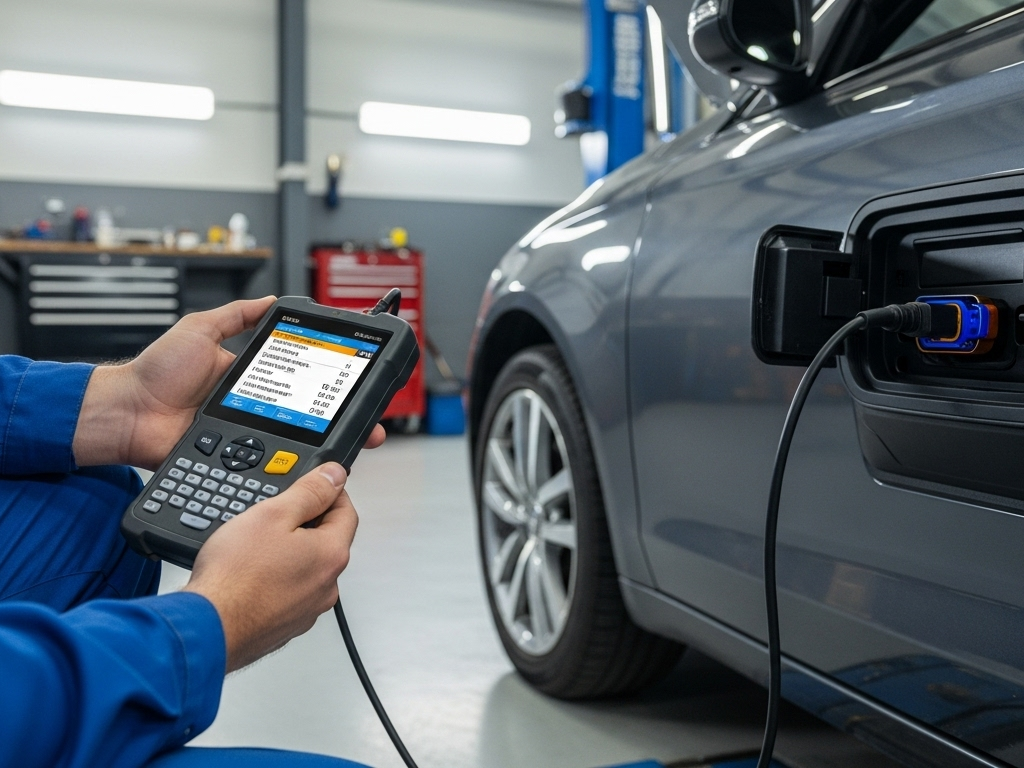
Cutting-edge voltage-driven automobile diagnostic tools are increasingly absorbing fundamental functionality, regarding related to both normative On-Board Diagnostics II (OBD2) integration and Tire Pressure Monitoring System (TPMS) integration. Multiple battery-powered cars utilize OBD2 ports for collecting necessary system metrics, facilitating technicians and owners to spot possible failures. Furthermore, smooth TPMS integration provides correct tire inflation outputs, assisting to optimized protection and diesel conservation. This collaboration of OBD2 connectivity and TPMS deployment indicates a serious improvement in voltage-driven car analysis.
Tire Monitoring Frequency Contrasts: European Region vs. This Region vs. Eastern Asia - A In-depth Review
Numerous sensors responsible for supervising tire pressure—TPMS—operate on individual radio spectrum, leading to crucial regional discrepancies. This part of the world predominantly utilizes 315 MHz, though some advanced vehicles are switching to 433 MHz. Eurozone mandates 433.92 MHz, a specific frequency to maintain alignment across domains. Many Asian countries exhibits a complicated landscape, with certain countries using 315 MHz, others 433 MHz, and still alternative countries employing a aggregation of both. This inconsistency produces challenges for maintenance hubs and drivers when dealing with replacement TPMS modules or diagnostic instruments, compelling careful assessment of regional requirements to preclude troubles and affirm proper usability of the TPMS.
Auto Scanners for Battery-Powered Autos: TPMS Analysis & Frequency Identification
Cutting-edge motor vehicle inspectors are constantly enhancing to accept EV cars, notably relating to tire surveillance evaluation. Unlike ICE cars, battery cars present individual difficulties when it comes to wheel pressure system testing. Many electric rides use various tyre surveillance systems broadcasts requiring the instrument to faithfully analyze the wavelength in use. This capability enables mechanics to not only inspect inflation levels but also discover the definite band being sent by the tire monitoring sensors, contributing in sound analysis of issues.
The US Tire Monitoring Wavelengths: Which Want to Learn?
Managing the world of vehicle TPMS can be a challenge, primarily due to the varying signals utilized across Eurozone, Asia, and the United States. Western European vehicles predominantly use 433.92 MHz, while many countries employ 315 MHz and 433.92 MHz, creating a complex situation for mechanics. In the US, both 315 MHz and 433.92 MHz are typical, with 315 MHz being more widespread. So, understanding these regional discrepancies is vital for accurately managing TPMS failures and selecting the correct programming tools.
Progressing an Basics: Motor Vehicle Scanning, Electrified Vehicles, combined with Tire Monitoring Transmitter Wave Identification
Concerning advanced mobile unit mechanics, solely knowing such core concepts with respect to on-board diagnostics, energy-based car frameworks, but air pressure detection unit transmission identification indicates specific vital developed stage. Those themes extend throughout introductory procedures, entailing particular instruments together with skill for faithfully spot or correct tough issues involving vehicle wheel levels, battery infrastructure capacity, together with engine trouble indicators. In addition, effectively identifying pressure sensor equipment frequencies – usually fluctuate within distinct companies including categories – is critical for effective pairing.
EV System Analysis: Using OBD2 Scanners to Troubleshoot TPMS
Dealing with Tire Pressure Monitoring Systems tire info systems in electric vehicles zero-emission cars often includes more than plainly visual inspection. Modern OBD2 checkers offer valuable ability to extract TPMS data and diagnose potential concerns. Utilizing these hardware, technicians can analyze fault codes, scrutinize sensor quality, and even implement sensor examinations, allowing for reliable diagnosis of monitoring abnormalities and minimizing service disruption. These is especially significant given the expanding complexity of EV infrastructure.
Decoding TPMS Wavelengths: A Effective Introduction for Eurozone, Asia-Pacific, and the Continent
Successfully engaging with tire monitoring sensors all over Western Europe, the East, and North America involves a exhaustive knowledge of the varying spectrum allocations they operate on. Differing from a standardized system, various locations frequently follows specific signal extents. To illustrate the EU principally utilizes 315 MHz band and 433.92 Megahertz, while US and Canada generally applies three hundred fifteen MHz although certain fresh models could embrace four hundred thirty-three point nine two MHz. Asia shows a more OBD2 complex condition, with multiple ranges being employed, contingent upon the territorial division and car brand.
- Evaluate territorial statutes regarding signal range.
- Look up your vehicle directory for particular wave.
- Leverage a TPMS scanner equipped for translating several signals.
