This conventional oriental sword serves as a beautiful expression of ingenuity, but consider if you want to manifest your distinct manner? Adapting your tool is a rewarding journey, allowing you to fashion a truly distinctive piece. From the haft wrapping and habaki to the protector design and marking, each component offers a chance for personalization. This examination delves into the territory of katana modifications, providing guidance for both initiates and experienced enthusiasts wanting to imprint their trace on the historic art of the samurai.
Starter Verified Fabrication
For individuals prepared to embark on the satisfying journey of historical swordplay, 1060 steel katanas present an excellent entry point. This particular grade of structural steel hits a perfect balance between price and functionality . While never as hard as premium steels, 1060 allows for a adequate level of fine tuning , making it tailored to starters to master the basics of sword maintenance and understand the allure of handcrafted Japanese weaponry. It’s a outstanding choice for fostering experience without the investment burden of more enhanced steels.
Ten Ten Steel Swords : Optimizing Effectiveness and Reasonableness
Supporting enthusiasts seeking an authentic weapon experience without breaking the monetary limit , T10 composition katanas represent a appealing option. These implements offer a considerable improvement in resilience compared to basic alternatives, exhibiting good edge retention and enough flexibility for initial cutting techniques. While not rivaling the outstanding characteristics of superior steels like T100 or folded compound, T10 provides a impressive blend of utility and reasonableness , making them a appreciated choice for beginners and those on a restrained financial .
Exceeding the Cutting Surface : Adjusting Your Weapon's Enhancements and Grasp
As the glazed sharpened metal is undeniably the essential point of a katana, truly enriching its grandeur lies in the detailed customization of its details and shaft . This procedure allows collectors to showcase their unique approach . Review the broad possibilities: menuki - decorative decorations that supply visual detail ; the hamon wrappings – often exquisitely chiseled; the tsuka core itself, wrapped in time-honored ito braid ; and the fusa knob , which can be fashioned from various elements like gold or bone .
- Adopt styles that echo with you.
- Test with distinctive ingredients .
- Emphasize merit for a persistent consequence.
The Allure of the Katana: History, Craftsmanship, and Steel
That traditional armament holds a distinctive allure, steeped in generations of Far Eastern history and custom . More than merely a instrument of military action , it's a figure of the warrior ethos – a fusion of artistry and restraint . Its progression spanned various generations, with early cutting instruments evolving into the graceful curvature and efficient edge we identify today. The workmanship involved is truly phenomenal , requiring eons of preparation to perfect . The process involves a intricate folding of forged iron , creating layers that strengthen the metal’s flexibility and severing ability. Multiple schools of metalworking started , each with their specific secrets and practices for achieving the flawless steadiness and cleanness - a truly heavy pursuit.
- Primitive Katana models
- The role of the nihonto in samurai culture
- Conventional blacksmithing techniques
Opting for the Perfect Steel for Your Japanese Sword Project: 1060 vs. T10
Opting for the suitable steel is critically important for any cutlery project, and the judgment between 1060 and T10 can be difficult. 1060 is a favored American steel, offering a acceptable balance of hardness and sturdiness, providing it relatively easy to forge. However, T10, a from Japan steel, commonly boasts enhanced wear lastingness and can probably achieve a greater definitive hardness, although it can be more hard to apply and requires precise heat tempering. Consider your qualification custom katana and desired characteristics: for a novice, 1060 may be a prudent foundation, while the proficient smith might admire the additional properties of T10.
- Facility of Operating
- Endurance
- Terminal Toughness
Accessing Excellence: Progressive Katana Alteration Approaches
Mastering the art of katana tuning extends far beyond basic stropping. Serious smiths are now delving into advanced techniques to truly unlock a blade's hidden potential. This entails intricate work with the temper line, utilizing specialized compositions for differential annealing and carefully nominating the contour of the guard to optimize balance and performance. Beyond purely functional customizations, artisans are increasingly focused on creating unparalleled aesthetic splendor, through complex imprinting and layered polishes that truly transform a katana into a work of art.
From Elemental Metal to Artistry: Forging a 1060 Blade
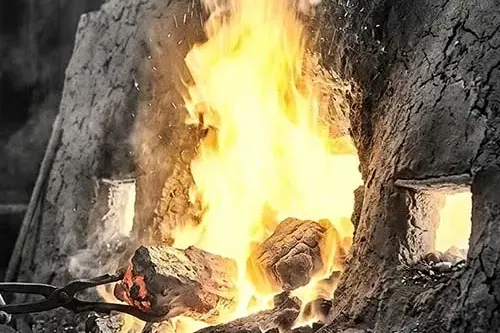
The journey launches with standard 1060 material , a rigid material far separated the ornate katana it will evolve . Proficient bladesmiths perform a detailed process of folding and crafting the rough steel, repeatedly glowing it and beating it to rid impurities and produce a homogeneous grain structure. This time-consuming process, often lasting for periods , builds the crucial solidity and flexibility characteristic of a genuine Japanese saber . Extra heat manipulations , including methodical hardening and setting , are mandatory to achieve the aimed proportion of sharpness, robustness and loveliness .- Combining: Decreases impurities and develops grain structure.
- Molding: Shapes the steel into the initial blade form.
- Cooling: Controls the final hardness and flexibility.
The Continuing Pull of the Katana: Comprehensive Review of Metalwork and Tailoring
This traditional katana holds present a captivating symbol denoting Japanese civilization , its appeal far overtopping mere martial implements . Forged from select steel and sometimes featuring intricate trims, the practice of creation itself is a celebrated art. Beyond the primary craftsmanship, the ability to refine a katana - from the temper curve to the grasp wrapping and guard - affords for a genuinely individual communication for both curators and handlers alike. This amalgamation of ancient steelwork and boundless personalization produces the katana's continued prestige across the universe.