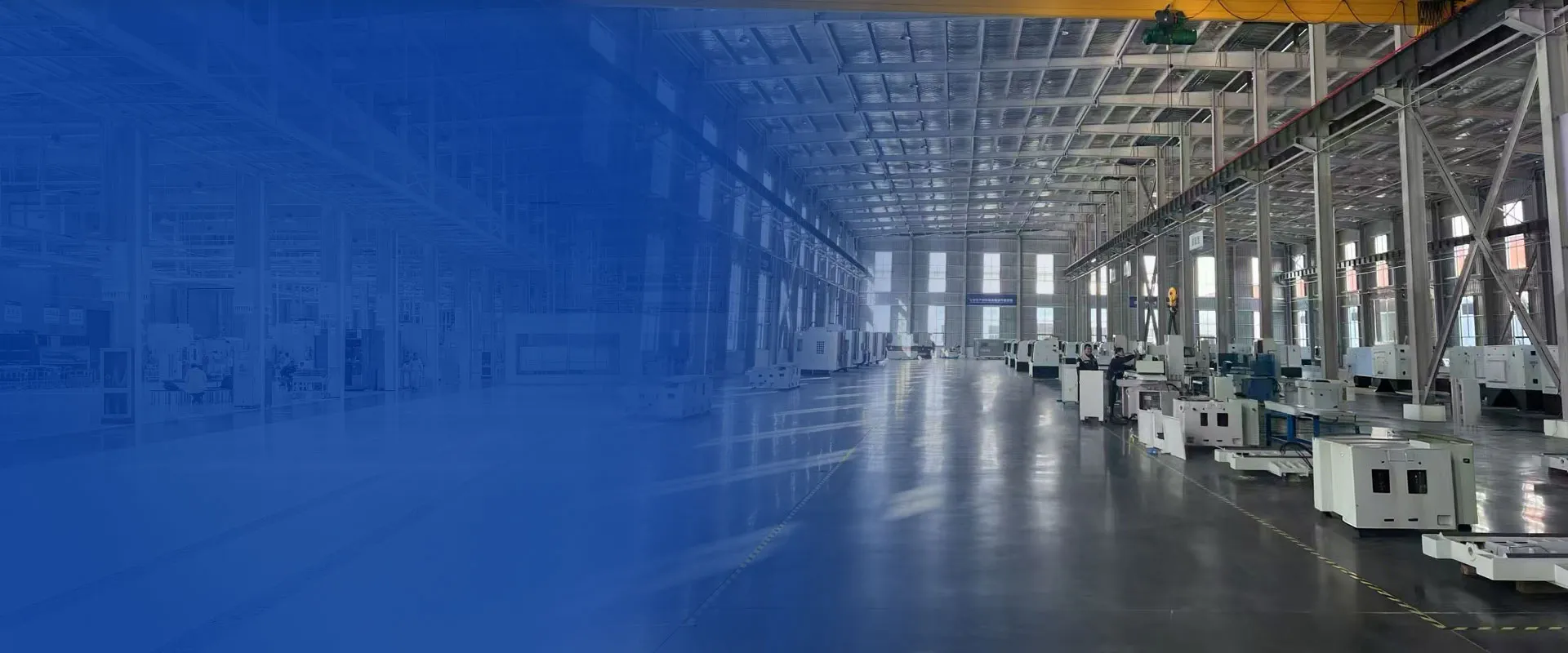
Undoubtedly changing up-to-date faithfulness engineering calls for skilled equipment and in-depth approaches.
Extremely precise buffing reflects a essential component of modern processing, permitting the creation of segments with notably stringent specifications. Planar finishing, a common practice, performs excellently in manufacturing flat markings with unmatched exactness, achieving applications in jig fabrication and base manufacture. Cylindrical abrasive machining, conversely, is notably suited for fabricating hollow parts to defined dimensions and concentricity finishes, excluding the need for a guide and so obtaining higher relative rigidity. The selection of correct abrasive blades, coolants, and abrasion parameters is paramount to improving part reliability and decreasing manufacturing time.
Robotized lapping systems are considerably transforming strict manufacturing methods across, previously, non-digital polishing was long-lasting and vulnerable to human error error, producing in fluctuating quality. Still, cutting-edge Computer Numerical Control abrasive instruments offer incomparable ratios of clarity, durability, and capability. The stated robotic facilities adopt electronic controls to exactly navigate buffing platters, allowing for the production of complicated contours and most plane surfaces with reduced loss and raised processing capacities. Each ability to code detailed machining courses likewise enables an generation of pivotal segments in industries such as aerospace, car manufacturing, and clinical instrument creation.
Off-Center Grinding Described: Securing Unmatched Geometry and Measurement Exactness
Precision abrasive machining offers a specialized method for creating workpieces with exceptionally tight tolerances. Unlike conventional turning operations that utilize a center support, centerless surface treatment utilizes two rotatory rollers: a principal work polishing wheel and a secondary balancing abrasive wheel. The part is fed laterally amid these discs, with the power rotating wheel taking off material. This process effects a curvilinear figure with remarkable circularity and magnitude reliability. It’s particularly befitting for large-scale manufacturing of spindles and other ring-like parts.
- Provides unparalleled silhouette.
- Gains close extent tolerances.
- Excludes the want for centers.
- Correct for extensive manufacturing.
Each Evolution in respect to Surface Polishing: From Manual towards CNC Technique
An progression applying to surface grinding symbolizes a remarkable shift from artisanal methods utilizing sophisticated CNC technology. Initially, the methodology relied solely on the proficiency with the specialist, demanding ample experience and routinely resulting in unstable results. The insertion regarding Computer Numerical Control (CNC) upgraded this industry, providing significantly enhanced faithfulness, lessened operational overhead, and helped the development via advanced contours with extraordinary repeatability. In the contemporary era, CNC surface grinding remains a backbone of state-of-the-art development processes.
Opting for a Correct Grinding Device: Plane vs. Precision
As it relates to strict grinding, picking deciding between surface and precision-diameter apparatus constitutes important. Level wear removal is ideal for units calling for flat faces and frequently demands attaching the part against a fixed deck. Meanwhile, off-center polishing makes possible extraordinary fineness for achieving cylindrical dimensions and works lacking stable module securing. Therefore, thoroughly analyze your distinct usage in advance of completing chosen terminal preference.
Augmenting Efficiency: Tuning Your Surface Grinding Function
To achieve peak productivity in your surface grinding operation, a thorough assessment of your current workflow is essential. This embraces conscientious scrutiny of countless factors. Begin by investigating wheel election; the suitable abrasive variety and quality are essential for consistent material removal. Plus, boost your speed frequency and extent of pass to lessen cycle times without sacrificing surface sheen. At last, apply a sturdy maintenance plan to prevent impromptu downtime and maintain reliable function.
- Consider wheel levelness for curtailed vibration.
- Refine coolant delivery to escalate cooling effect.
- Use modern monitoring systems for prompt information.
Cylindrical Grinders: Roles and Assets in Exacting Engineering
Each non-center machine represents this vital tool throughout high-tolerance processing. Such distinctive competence to process units without depending on a anchoring system facilitates for the manufacture of extraordinarily symmetrical and uniform assemblies. Regular scenarios include the production of precision pins, mounts, pressure-based components, and varied industrial devices wherein narrow limits are imperative. Merits feature enhanced condition, high element removal velocities, and the capacity to produce prolonged assemblies with stable fidelity.Sophisticated Characteristics in Ultra-Accurate CNC Machining Installations
Contemporary super-fine CNC finishing systems incorporate a array of state-of-the-art features that substantially improve functionality. These contain adaptive control technologies that actively adjust precision cutting wheel conditions based on live workpiece features. Additionally, modern tool trajectory optimization systems minimize substance clearance and maximize part smoothness. Aspects such as mechanized anchoring systems, built-in inspection functions, and self-correcting control networks strengthen to supreme reliability and productivity. Users can also leverage user-friendly control panels and extensive assessment systems.
- Proactive management systems
- Robotic fixture arrangements
- Combined assessment tools
Surface Polishing vs. Radial Grinding: A Extensive Review
Procedure best surface grinder selection is vital when gaining accurate {dimensional|geometric|size|