Welcome
OurTech Gadget’s Pulse Check functionality has innovated how numerous users track their circulatory health. This explanation studies into the mechanics of the ECG tool on the Watch, outlining how it operates and what classification of information it can yield. We’ll cover the core principles of cardiologic measurements, potential restrictions, and vital points to safeguard in thought before trusting the evidence. Ultimately, this post aims to equip you to realize your cardiopulmonary’s rhythm with the reinforcement of your Device
Learning about ECG+ on Your Device
Everyone's Apple Watch presents a considerable feature, the ECG+ program, empowering you to gather an electrocardiogram directly from your wrist. This device isn't a proxy for regular medical tests, but it renders valuable data about your heart pulse. The ECG+ app discerns atrial fibrillation (AFib), a genre of irregular heartbeat, and can manifest other heart aberrations. To use it, ensure your watch and iPhone are matched. You’ll be obligated watchOS 7.5 or latest and iOS 14 or fresh on your iPhone. The process involves placing your fingers on the Digital Crown and a area below it, letting the watch conclude the reading. Results are archived in the Health app and can be communicated with your specialist.
- Authenticate proper watch positioning.
- Keep to on-screen instructions.
- Discuss results with a healthcare professional.
Explaining How Apple Watch Heart Monitor Works
The The smartwatch’s ECG function uses an innovative approach to capture your coronary electrical patterns. It operates by incorporating electrical electrodes located within the crown and the band. When you initiate an ECG scan, these sensors send small electrical burst through your appendage, which consequently trace the electrical traces of your beats. These outputs are evaluated by sophisticated software within the watch to assemble an ECG overview, which can then be observed within the medical software on your cellphone. Concerning accuracy, while the Apple Watch ECG reader can present valuable facts, it is not meant as a alternative for a traditional ECG completed by a certified technician. Studies have shown contrasting levels of harmonization with 12-lead ECGs, highlighting the necessity for analysis by a healthcare provider and it needs to be used as a tool for tracking purposes, not for conclusive determination of vascular conditions.
Interpreting the this timepiece ECG Software
One’s Watch's ECG program can seem complex, but understanding how it executes is fairly simple. It’s key to recognize that this tool isn't built to substitute a licensed practitioner’s evaluation; instead, it gives a depiction of your cardiovascular electrical activity. Fundamentally, the watch uses electrodes placed in the crown and digital to sense the electrochemical signals. The procedure can highlight potential anomalies like atrial oscillations, ECG+ which requires supplementary medical evaluation.
- It's a introductory method.
- Always see a professional.
- Understand the boundaries.
ECG on Apple Watch: Comprehending Your Cardiopulmonary Readings
Your Apple Watch's ECG capability offers a considerable glimpse into your heart's beat pattern. That said, it's crucial to understand that these outputs aren't a stand-in for a medical diagnosis. An ECG is able to detect exceptions like atrial fibrillation (AFib), which is a condition where your cardiac beats sporadically. Distinct findings could include normal sinus rhythm, or unusual patterns that demand in-depth investigation by a practitioner expert. It is vital to share your ECG results with your physician for valid assessment and adapted advice.
Are Your Wearable Watch Cardiac Monitoring Giving Trustworthy Results?
The emerging Apple Watch ECG feature supplies a tempting glimpse into your cardiopulmonary health, but a question lingers: is it truly delivering accurate information? While the Apple Watch ECG is certified by the FDA, it's necessary to know it's not a backup for a professional diagnostic evaluation. It’s designed to spot potential pulse inconsistencies, which potentially signals a need for further investigation, but false signals and false misreads are potential. Several aspects, including proper location of the watch and surface contact, impact in producing effective results. Take into account consulting with your clinician regarding your ECG results and never make conclusions alone from the Apple Watch's review.
- Confirm proper watch fit.
- Share results with your physician.
- Don't self-treating based on ECG observations.
Apple Watch ECG & ECG+: Facets and Gains Evaluated
An Device offers a modern ECG and ECG+ utility, supplying users to obtain the electrocardiogram directly from their extremity. The primary ECG software can identify signs of atrial fibrillation, specific potentially alarming heart disorder. ECG+ builds upon this, furnishing a increased 30-second recording period and additional analysis directed on spotting left-sided ventriculoatrial lobes, which can represent relevant for defined patients with an chronicle of undetermined cerebral event. These tools embody a notable breakthrough in mobile biological assessment systems, hypothetically empowering for advanced treatment and better client results.
Repairing Common Errors with an Apple Watch ECG
If a user’s Apple Watch ECG function isn't acting appropriately, diverse likely origins exist and could be fairly corrected. First, ascertain the watch and your iPhone are refreshed with the most recent software. Following that, explore refreshing both equipment; a basic reboot commonly remedies slight glitches. Besides, check the ECG preferences in the Health suite to make sure all essential parameters persist established accurately. To conclude, if the person is still facing complications, get support from Apple Assistance for extra direction.
Transcending the Fundamentals: In-depth Apple Watch ECG Examination
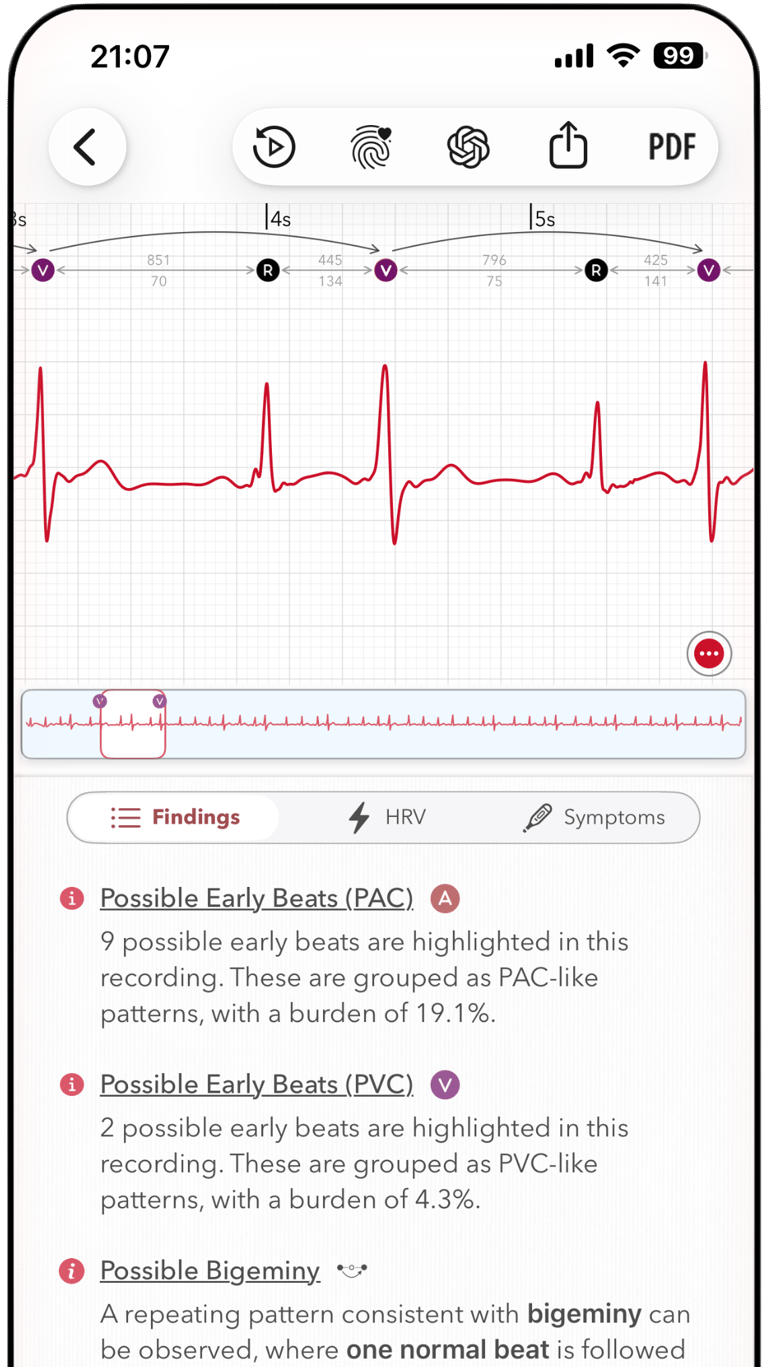
While the Apple Watch’s ECG tool offers a significant tool for spotting potential atrial fibrillation, analyzing surpassing the initial assessment unlocks a universe of intricate capabilities. Deliberate observation of the entire waveform, including aspects like P wave structure, PR stretch, and QRS aggregate, entails a intense familiarity of cardiac physiology. Furthermore, evaluating trends over periods and matching ECG outputs with subject’s signs can contribute significant insights for improved treatment scrutiny, notwithstanding it's imperative to remember that the Apple Watch ECG is not a replacement for a professional cardiac evaluation.
Farewell